You add some keywords, run the campaign and get some clicks. But when you take a look at the Search terms report, there’s something strange. Someone typed “free resume templates” and clicked your paid course ad.
This has happened more than once on my accounts, and I can tell you that most of the times it’s because of Google Ads keyword match types. They define the similarity between a search and your keyword necessary for triggering your ad. If you choose the wrong match type, you will be wasting your budget for nothing waiting for any sales to happen.
What Are Google Ads Keyword Match Types?
Match type is nothing but the guidelines that show up to what extent Google can match your keyword with the search query.
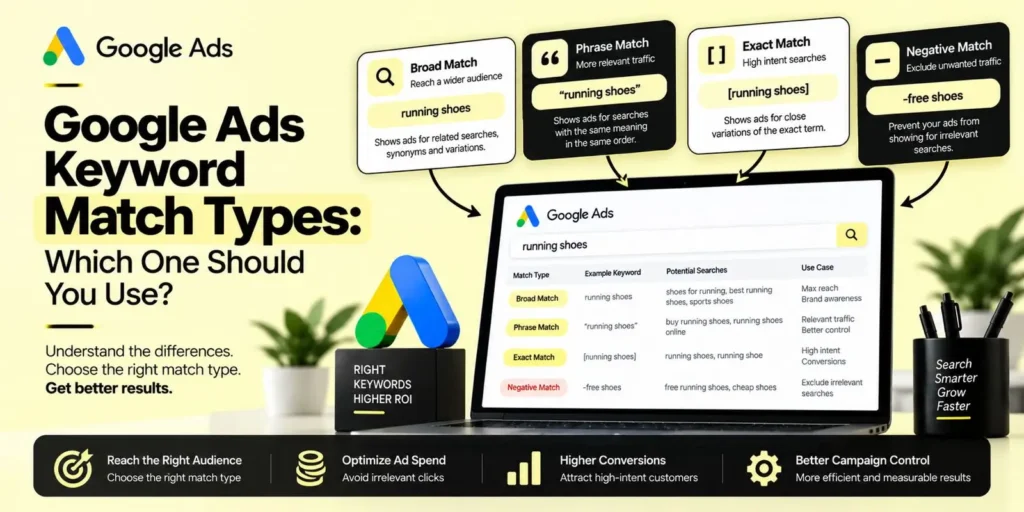
You get three: broad, phrase, and exact. Add negative keywords on top and you have the full toolkit for Google Ads keyword targeting.
One quick warning if you’re reading older guides. Modified broad match was discontinued by Google in 2021 and was integrated into phrase match. Plus signs in the guide are therefore obsolete information.
How Does Google Ads Broad Match Work?
Google Ads broad match is the default. You type the keyword with no symbols and that’s it.
Google says it shows your ad on searches related to your keyword. It also looks at more than your words. It weighs meaning, past searches, and even your landing page.
So “running shoes” could show up for “best sneakers for jogging.” That’s handy when you want new search ideas. It can also attract lots of rubbish because that is why you need a negative keyword list prepared prior to your campaign going live.
How Does Phrase Match Work in Google Ads?
Phrase match in Google Ads is characterized by the use of quotation marks like “running shoes for women.”
It shows your ad on searches that include the meaning of your keyword. A search for “women’s trail running shoes” can trigger it. “Men’s running shoes” shouldn’t.
It sits in the middle, with more reach than exact and fewer surprises than broad. Most accounts I’d call healthy lean on it for the bulk of their keywords.
How Does Google AdSense Exact Match Work?
The Google AdSense exact match includes square brackets like [running shoes].
The naming might be slightly confusing at times. Exact match includes similar searches in meaning and intent, not necessarily identical text. Even “running shoe” can trigger it.
It’s still your tightest option, though. If a search matches an exact keyword word for word, Google gives that keyword priority over your broad and phrase ones. Save it for your best converters and your brand terms.
Which Match Type Should You Pick?
A Quick Comparison:
| Match type | Symbol | Reach | Best for |
| Broad | None | Widest | Finding new searches with good data |
| Phrase | “keyword” | Medium | Most keywords, day to day |
| Exact | [keyword] | Narrowest | Proven winners and brand terms |
Where Do Google Ads Negative Keywords Fit In?
Negatives work like a filter. Google Ads negative keywords tell Google which searches you never want to pay for.
They don’t act like regular keywords, either. Negative match types are far more literal than their positive versions. Google won’t assume “cheap” and “inexpensive” mean the same thing, so you need to add both.
Open your search terms report once a week. Watch for words like “free,” “jobs,” “DIY,” and “review.” If a search can’t end in a sale, block it.
How Should You Structure Match Types in Your Account?
Here’s the setup I’d suggest.
Begin with a phrase match for most of your keywords. Once a keyword proves it converts, move it to exact match.
Try a broad match later, in its own campaign with a capped budget. Keeping it separate stops broad keywords from grabbing traffic your exact keywords should win.
Check that conversion tracking works before you touch broad. It needs clean data to learn anything useful.
Sometimes match types aren’t the real problem. If your spend keeps climbing and sales stay flat, read our post on why Google Ads Are Not Scaling. It covers the other usual suspects.
Selling products? Shopping ads run off your product feed rather than keywords, so the feed matters more than any match type there. The Google Merchant Center Optimization Checklist is the place to start.
The Bottom Line
Match types feel confusing at first, but they follow a clear pattern. Broad gives you reach, phrase gives you balance, and exact gives you control. Negatives clean up whatever slips through.
Start with phrases, move your winners to exact, and test broad slowly. Then open that search terms report this week, not next month. You’ll probably find a few clicks you’d rather not have paid for.
FAQs
1. Which match type is best for beginners?
Phrase match. You get reasonable reach without the wild swings of the broad, and it’s easier to keep under control while you learn.
2. Is broad match worth using?
It can be, as long as conversion tracking works and you check search terms often. Without those two, it tends to eat up the budget.
3. Does exact match still mean exact?
Not anymore. It now covers searches with the same meaning or intent. If you want tight control, lean on negative keywords too.