If you’ve ever stared at your ad dashboard thinking, “These numbers look good… so why does scaling feel stressful?” – you’re not alone.
This happens to a lot of D2C founders. Google Ads says you’re profitable. Meta looks solid. Paper-wise, it all appears fine. However, the reality is that there are constrained margins, fragile cash flow, and it seems dangerous to spend more.
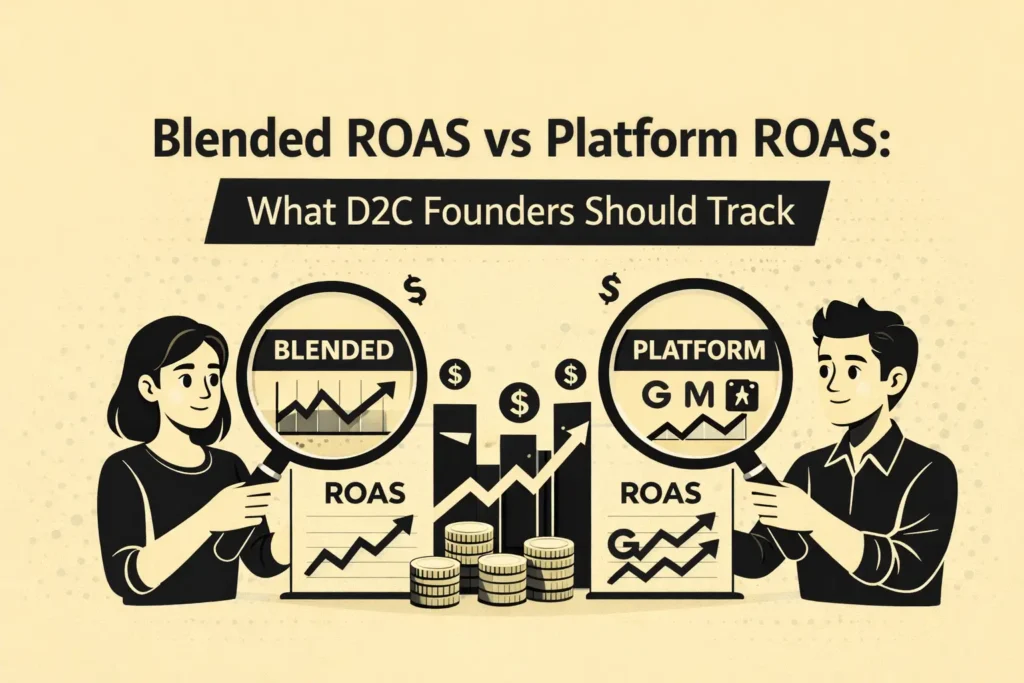
In many cases, it is not your advertisements, but your perception of Blended ROAS vs. Platform ROAS.
They share similar sounds, but they convey dissimilar meanings. Failure to know the difference would make you grow, maybe too fast in the wrong direction.
Platform ROAS: The Metric That Makes You Feel Good
The reports on the dashboard of each ad platform indicate platform ROAS.
In simple terms, it answers:
“Based on this platform, what was the level of revenue my ads generated?”
When Google Ads records a revenue of 40,000 on 10,000, it means that the ROAS is 4-fold. Clear. Simple. Reassuring.
Platform ROAS is useful indeed in D2C brands that rely on Google Ads. It helps you:
- See which campaigns and keywords are working
- Test new creatives or landing pages
- Decide what to scale inside the account
The problem is that platform ROAS lives in a bubble.
Each platform wants credit for the sale. So they:
- Take more credit than they should
- Ignore what other channels contributed
- Don’t account for email, SMS, organic, or brand traffic
That’s why Meta, Google, and TikTok can all look profitable at the same time – while your bank balance tells a different story.
Blended ROAS: The Metric That Tells the Truth
Blended ROAS looks at everything together.
Instead of asking what one platform claims, it asks:
“For every dollar I spend on ads total, how much revenue does my store actually make?”
The formula is simple: Total store revenue ÷ total paid ad spend
If your store makes $120,000 in a month and you spend $40,000 across all paid channels, your blended ROAS is 3x.
This is the number founders eventually start trusting. It’s also the number any experienced paid search management company will focus on when helping brands scale.
Why? Because blended ROAS:
- Matches real cash flow
- Shows the full impact of paid media
- Tells you whether growth is sustainable
It’s not flattering. But it’s honest.
Blended ROAS vs Platform ROAS (No Jargon Version)
Here’s the easiest way to think about it:
- Platform ROAS helps you run ads better
- Blended ROAS helps you run your business better
Platform ROAS answers: “Is this campaign performing well?”
Blended ROAS answers: “Can I keep spending like this without hurting the company?”
This difference of Blended ROAS vs Platform ROAS becomes critical when you’re Scaling D2C Brands From $50k to $500k/Month Using Google Ads. At higher spend levels, small mistakes get expensive fast.
When to Look at Each Metric
You don’t need to pick one and ignore the other. The smartest founders use both – just for different decisions.
Use platform ROAS when you’re:
- Testing new campaigns or creatives
- Optimizing keywords, bids, or audiences
- Comparing performance inside a single channel
Use blended ROAS when you’re:
- Increasing total ad spend
- Planning inventory or cash flow
- Deciding if growth is actually healthy
If platform ROAS looks great but blended ROAS keeps dropping, that’s not a win – it’s a warning.
Mistakes D2C Founders Make (All the Time)
1. Scaling because one dashboard looks profitable
This is how brands burn cash while thinking they’re winning.
2. Killing channels that don’t “convert” last-click
Some channels support the sale rather than close it. Cutting them can hurt overall performance.
3. Obsessing over ROAS and ignoring margins
A high ROAS doesn’t matter if fulfillment, refunds, and retention kill profitability.
Final Thought
Platform ROAS tells you what you want to hear. Blended ROAS tells you what you need to hear.
If you want steady, predictable growth, use platform ROAS to optimize your ads – but let blended ROAS guide your big decisions.
That’s how D2C brands scale without losing sleep – or money
FAQs: Blended ROAS vs Platform ROAS
1. What’s a good blended ROAS for D2C brands?
Most healthy D2C brands fall between 2.5x and 4x, depending on margins and repeat purchase rate.
2. Why is platform ROAS almost always higher than blended ROAS?
Because platforms over-attribute conversions and don’t account for overlap between channels.
3. Should I stop ads if blended ROAS drops?
Not immediately. Short-term dips happen during testing or launches. Long-term declines need attention.
4. Is blended ROAS better than CAC?
They measure different things. Blended ROAS shows revenue efficiency; CAC shows acquisition cost. You need both.