Scaling a Shopify store isn’t easy.
At some point, your ads stop working as well. Costs go up. Returns go down. And growth slows.
That’s exactly where Performance Max comes in.
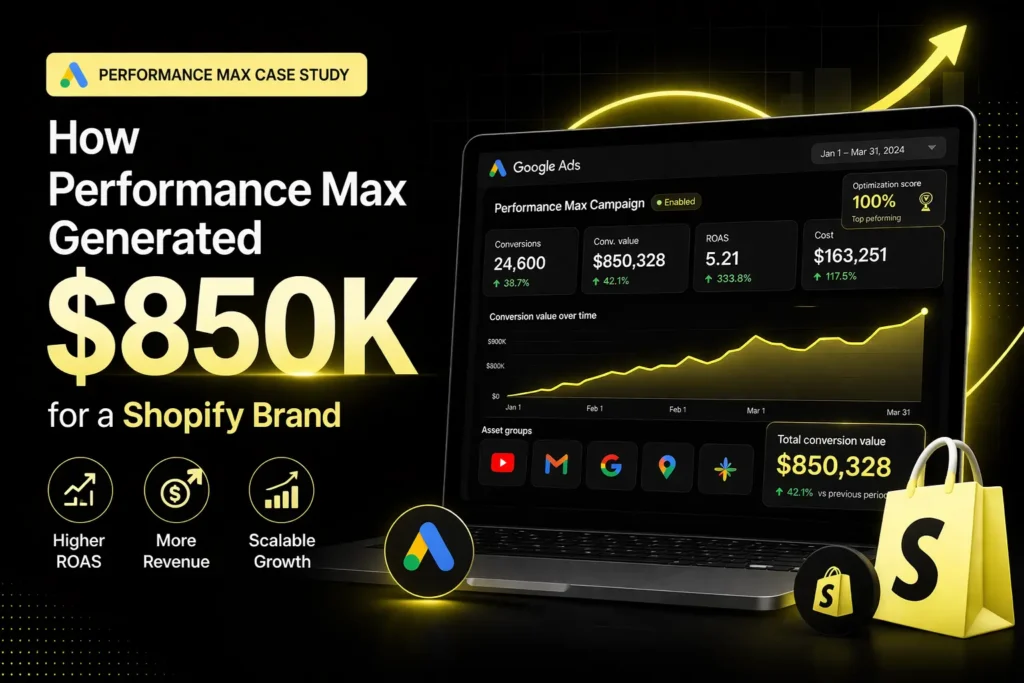
In this Google Performance Max case study, you’ll see how a Shopify brand unlocked $850k in revenue using a smarter, more unified campaign strategy.
Let’s break it down.
What Is Performance Max (And Why It Matters)?
Performance Max is a goal-based campaign type inside Google Ads.
But here’s the difference:
Instead of running separate campaigns for Search, Shopping, Display, and YouTube…
Performance Max runs everything in one place.
It uses automation to show your ads across:
- Google Search
- YouTube
- Display Network
- Gmail
- Discover
- Shopping
So instead of guessing where your best customers are…
Google finds them for you.
For Shopify brands, this is huge.
Because your products can now reach buyers at every stage – from discovery to purchase.
The Challenge: Scaling a Shopify Brand Profitably
Before switching to Performance Max, most brands face the same problems:
- Campaigns are fragmented
- Scaling breaks performance
- Shopping campaigns hit a ceiling
- New customer acquisition slows down
Sound familiar?
That’s because traditional setups rely too much on manual control and that limits growth.
The Performance Max Campaign Strategy That Worked
This wasn’t about flipping a switch. It was about using Performance Max the right way.Here’s the exact Performance Max campaign strategy behind the results:
1. Consolidated Campaign Structure
Instead of running multiple campaigns, everything was merged into one Performance Max campaign.
Why?
Because consolidation gives Google more data.
And more data = better optimization.
2. Feed Optimization for Shopping
For eCommerce, your product feed is everything. So the focus was on:
- Clean product titles
- Accurate descriptions
- High-quality images
This helped Google understand the products better and match them with the right searches.
3. Strong Creative Asset Groups
Performance Max relies heavily on assets. So multiple variations were added:
- Headlines
- Descriptions
- Images
- Videos
This allowed Google to test combinations automatically and find what works fastest.
4. Audience Signals to Guide Learning
Audience signals don’t limit targeting. But they guide the algorithm early on.
So signals like:
- Past website visitors
- Customer lists
- Relevant interests
were added to speed up learning.
5. Smart Bidding with Conversion Focus
Everything was optimized for conversions. Performance Max uses real-time signals like:
- Device
- Location
- Time of day
- User behavior
So bids adjust automatically to get the best results.
How Performance Max Drove $850k in Revenue
Here’s where things get interesting. Performance Max doesn’t just optimize one channel. It works across all of them at once.
That means:
- More touchpoints
- Better attribution
- Higher conversion chances
Instead of relying only on Shopping, the brand captured demand from:
- YouTube discovery
- Display retargeting
- Search intent
This full-funnel approach helped unlock incremental revenue. And that’s how the campaign scaled to $850k.
Key Takeaways You Can Apply Today
If you want similar results, start here:
- Simplify your structure – fewer campaigns, more data
- Invest in your product feed – it directly impacts performance
- Upload more creatives – let Google test combinations
- Use audience signals – guide the algorithm early
- Focus on conversions – not clicks
Small changes like these can drive big results.
Performance Max vs Traditional Campaigns
Traditional campaigns give you control. Performance Max gives you scale.
But here’s the key difference: With traditional setups, you often look at channel-specific results.
With Performance Max, you need to think bigger.
That’s why many brands work with a Google Shopping Ads Agency to better understand how these combined interactions drive performance.
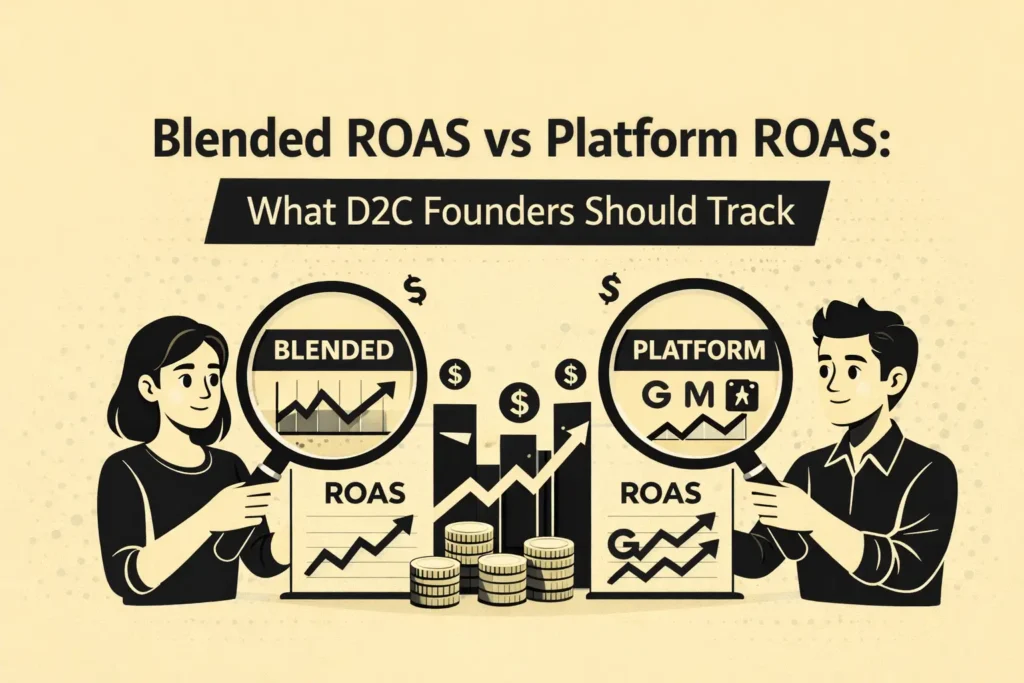
In this case, the difference between Blended ROAS vs Platform ROAS becomes clearer; platform ROAS only shows what happens within one channel, while blended ROAS helps you understand the total return across all channels working together.
Conclusion
Performance Max isn’t just another campaign type. It’s a shift in how you run ads.
Instead of managing everything manually, you guide the system and let automation do the heavy lifting.
And as this Performance Max Shopify case study shows that shift can unlock serious growth.
If you’re looking to scale your store, this might be your next move.
FAQs
1. Is Performance Max good for Shopify stores?
Yes. It’s especially effective for eCommerce because it combines Shopping with other Google channels in one campaign.
2. How long does Performance Max take to work?
Usually, it needs a learning period. During this time, the system tests different combinations and optimizes performance.
3. Do you still need standard Shopping campaigns?
In most cases, Performance Max can replace them. Because it already includes Shopping within a broader strategy.