Most marketers knew that this change in the way of doing things was going to happen. Brands can really benefit from using first-party data marketing to get results. They just kept delaying it.
Third-party cookies started crumbling. Privacy laws tightened. Audience lists that once converted reliably started underperforming. And suddenly, the targeting that felt effortless required a lot more guesswork.
That’s where first-party data marketing comes in – not as a trend, but as the practical fix brands actually need.
What First Party Data Actually Means
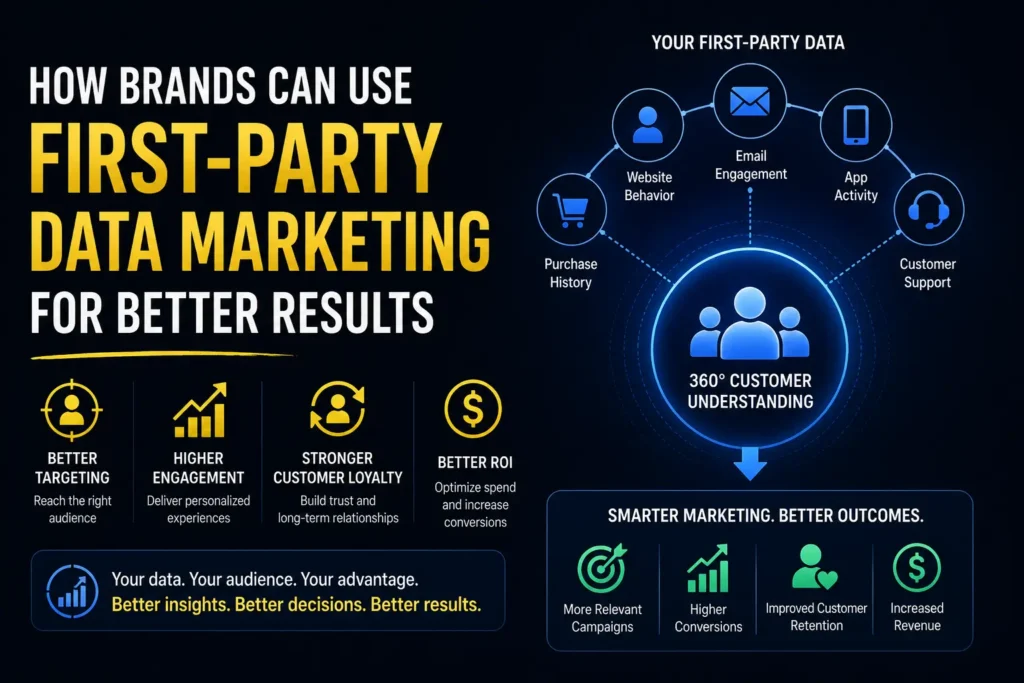
First-party data is information that customers give to you directly. They share this information with you when they do things like visit your website, buy things from you, sign up for your email, use your app, or join your loyalty program. You collected it. You own it. No broker involved.
Third-party data, by contrast, is aggregated from external sources and increasingly blocked by browsers and regulators. That data was never really yours to begin with. A customer who’s bought from you three times and opened your last five emails tells you far more than any purchased demographic profile ever could.
Where The Results Show up
- Personalization that actually lands: When you’re working from real purchase behavior, your recommendations make sense. Someone who bought a coffee grinder last month wants to hear about beans, not a blender. Customer data marketing done right means sending fewer emails to sharper segments. Open rates go up, not down.
- Less wasted ad spend: A big part of most ad budgets is spent on people who will never make a purchase. Using Data-driven marketing helps fix this problem by letting you create groups of people who are actually interested in what you have to offer based on how they have interacted with your company in the past. When you focus on people you already know are interested, you get a return on investment from your performance marketing. And that is not because you are spending more money, but because you are not throwing away the money you do have.
- Sharper Google Ads: Google rewards advertisers who bring their own audience signals. For brands running Google Ads for D2C brands, customer match lists built from purchase data and email subscribers consistently outperform broad targeting. Remarketing gets sharper too – you can separate someone who browsed twice from someone who nearly checked out. Those two people need completely different messages.
Getting Started Without Overcomplicating It
Start with an audit. What data do you actually have, and where does it live? Most brands already have a purchase database, an email platform, and analytics – they just haven’t connected them.
From that point, two things really make a difference: you give your customers a reason to share their information, like rewards or special deals, and you are honest about what you are taking and why you need it. When people trust the company, they are more likely to share more of their data. The company should give customers things like loyalty perks, access to new things, and special offers that are just for them. This is what makes people want to share their information, not a little box that they have to check.
An experienced ecommerce marketing agency can help bridge the gap between data sitting in your backend and campaigns that actually use it. The common failure isn’t bad data – it’s good data that nobody activated.
Why Is It Worth Prioritizing First-Party Data?
The first-party data benefits are very useful. For example, you can target the people without worrying about a platform changing its privacy rules. You also get to know your customers better. You own the first-party data you collect. When you build campaigns with first-party data, they usually work better. This does not mean they will always be hugely successful. They will be successful most of the time. Over time, these small successes, with first-party data, can really add up. Improve how well your campaigns do and how well you keep your customers.
The brands that started two years ago have a head start. But the window hasn’t closed. It’s just getting more expensive to wait.
FAQs
1. What is first-party data marketing?
First-party data marketing is when you collect information about your customers directly. You get this information through your channels, like your website, email, app, and purchase history.
You use this data to run campaigns that are more likely to work. The best part is that you own this data. It is collected with the customer’s consent. This data stays useful even if social media platforms or other online services change their rules.
2. How does it improve performance marketing ROI?
It helps to save money. When we target customers based on what they do, we reach people who actually want to buy. This means more people convert. We do not waste money on people who will never buy, thus improving the performance marketing ROI.
It is about targeting the right people. By using customer actions, we can find people who are actually interested. This way, we get results and do not throw away our budget on people who are not interested.
3. Can smaller e-commerce brands do this?
Yes. A focused email list and a year of purchase data is enough to start building real segments. You don’t need enterprise infrastructure – just a clear picture of your best customers and a way to reach them differently than everyone else.