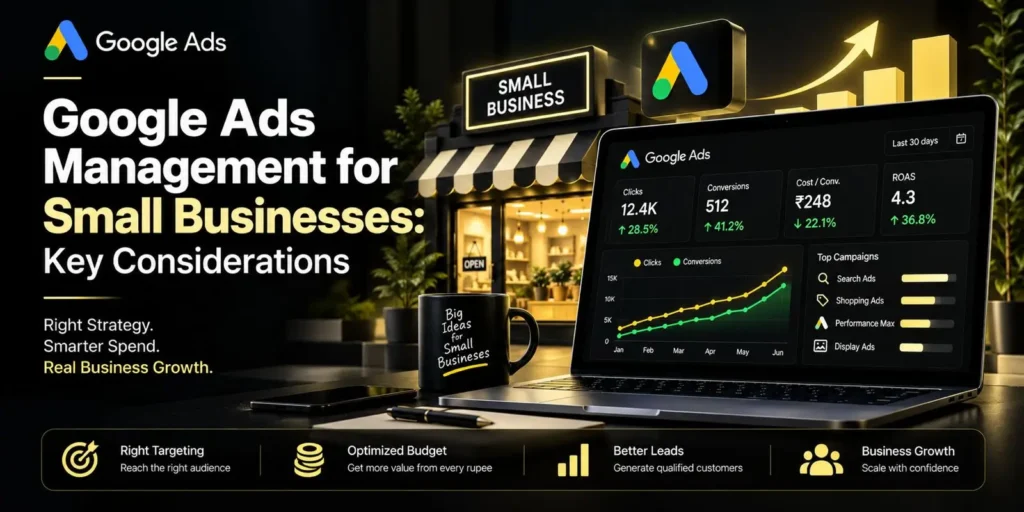
Tight budget? Same here, for most small business owners. Still, customers have to find you somehow. That’s where Google Ads for small businesses earns its keep: it shows your offer to people who are already typing what you sell into a search box. But here’s the catch. Launching an ad and crossing your fingers rarely works. You need sensible keywords, careful targeting, a budget you can live with, and someone paying attention every week.
Why Google Ads For Small Businesses Can Help
Picture someone searching late at night for a fix to a problem. Your ad can be right there. With Google Ads for small businesses, you can choose your location, your audience, your device and your keywords, so a corner shop and a national web store can both use it well.
Say you run a dental clinic. Instead of paying to reach a whole city, you can show up only for people searching for dental services nearby. Likewise, an online store can go after shoppers hunting for one particular product.
And the tracking? That’s the best part. Clicks, leads, calls, purchases, and other conversions are all measurable, so you aren’t guessing.
Build a Plan That Starts With A Clear Goal
Every great Google Ads strategy for small business starts with a blunt question: what do you want out of this? Leads, sales, bookings, calls, or just visitors? Decide first. After that, shape the campaigns around the answer.
Then think like your customer. What words would they actually use? Pick keywords that match those words closely.
Meanwhile, your plan should also settle a few basics:
- Target locations and audiences
- Campaign objectives
- Daily advertising budget
- Relevant keywords
- Conversion goals
- Landing pages
- Key performance metrics
Yes, it’s some homework. But it beats paying for clicks that go nowhere.
Choose High-Intent Keywords
Keywords carry a lot of weight in Google Ads for small businesses. Even so, a bigger list isn’t a better list. In fact, a bloated account usually just leaks money.
Go for searches that signal intent. “Buy accounting software” says someone is ready to act. “What is accounting software?” says they’re still reading up.
Negative keywords help as well. They keep your ads away from searches that have nothing to do with you. Besides that, open your search terms report once in a while. You’ll quickly see which queries bring real visitors and which ones only drain the budget.
That’s how small business PPC management stays tight, and why your money lasts longer.
Set and Manage Your Advertising Budget
The less money you have, the more painful it is to give it away. So, a good campaign shop is about getting, and getting the most, out of each rupee or dollar.
Start with a daily budget that doesn’t make you nervous. Then give it time. Watch how things perform before you raise it.
Track these numbers:
- Cost per conversion
- Conversion rate
- Click-through rate
- Cost per click
- Return on ad spend
Still, don’t fall for clicks alone. Sometimes fewer clicks bring better customers, and that’s a win.
Write Relevant and Compelling Ads
People skim. So tell them quickly what you provide. Include keywords, state one benefit and follow with an easy call to action.
Here are some honest strengths to play up, like local service, flexible appointments, straight talk, clear pricing, free consultations. The catch: Don’t make big promises you can’t deliver. People remember.
Also, keep testing headlines and descriptions. Eventually, a pattern shows up, and you’ll know which message pulls in better leads.
Optimize Your Landing Pages
The click is just the doorway. If the room behind it disappoints, people walk out.
So match the page to the ad and the keyword. Put the important details where eyes land first, and make the next step obvious.
Test it on your phone, too. A slow or cluttered page sends visitors right back to Google. For that reason, good Google Ads management always checks landing-page performance.
When to Bring In Professional Help
Honestly, running ads eats time. Keywords, search terms, budgets, bids, conversion data: something always needs checking.
If you’re already juggling everything else, that’s a heavy load. In that case, Google Ads management services can take it off your plate.
It generally involves researching best keywords, running analytics, writing ad copies, landing page creation, ad split test, creating budgets and continuous optimization. Demand of course, that you receive reports that you can understand. After all it’s your money and you should know where it goes.
Keep Improving With Time
Markets are never static. Competitors change their approach, buyers change their behavior, search trends change.
Because of that, never launch and walk away. Check your conversion data and search terms regularly. Then try new keywords, ads, landing pages, or targeting.
Gradually, your Google Ads strategy leans on facts instead of hunches. As a result, spending decisions get easier.
Final Thoughts
Google Ads for small businesses is a flexible, affordable way to reach the customers who already have their wallets out and are ready to buy. But it requires strategy and effort.
A solid plan stretches your budget. Meanwhile, steady oversight sharpens campaigns as more data comes in.
No time, or not sure where to start? A professional team can help.
FAQ
1. Is Google Ads suitable for small businesses?
Google ads for small businesses work, if your competition is not high and your ads quality is good to generate calls, leads and sales to get booking etc.
2. How much should a small business spend on Google Ads?
There is no magic number. Begin with what you think you can handle, then scale from there as results roll in.
3. What does PPC management include?
Typically keyword research, campaign setup, ad testing, budget management, negative keywords, conversion tracking, and regular optimization.
4. Should I hire a professional to run my ads?
Possibly, if time or experience is short. Before you commit, though, look at the provider’s track record, reporting, pricing, and approach.